“Gikan sa Baybay”, which means “From the shore” in Bisaya, is a collection of paintings documenting coastal ecology and life by the ocean. This collection started as a way to document the times I spent along the Burgos shore. Unknowingly, it opened a door to a fascinating world that has piqued my curiosity. The first part of this collection features painting studies from my journal highlighting coastal flora and fauna. The second part features whimsical paintings that translate the earlier studies, my own observations, reflections, and experiences of life here on the island, and finally, the third part is a space for conversation.
I: Coastal Ecology & The Art of Noticing
Creation is a ritual. The first act of noticing leads to learning, which then leads to understanding, and from there a gap gets to be filled, because that is how you build a relationship -to a living soul, to another person, to yourself, to your craft; Even more, that is how you build a reciprocal bond with the land.
This collection of watercolor studies of flora and fauna was created through repetitive observation, but instead of approaching this process through a purely scientific lens, I see the act of documenting these fragments as a way to have a conversation with the place to understand it deeply. This collection also serves as a creative archive of the unseen and overlooked elements of what makes Siargao’s shore what it is.
Disclaimer: Please note that I am not a professional scientist or taxonomist. While I strive for accuracy in this documentation, mistakes can happen! If you spot any misidentifications or have helpful suggestions, please feel free to message me.
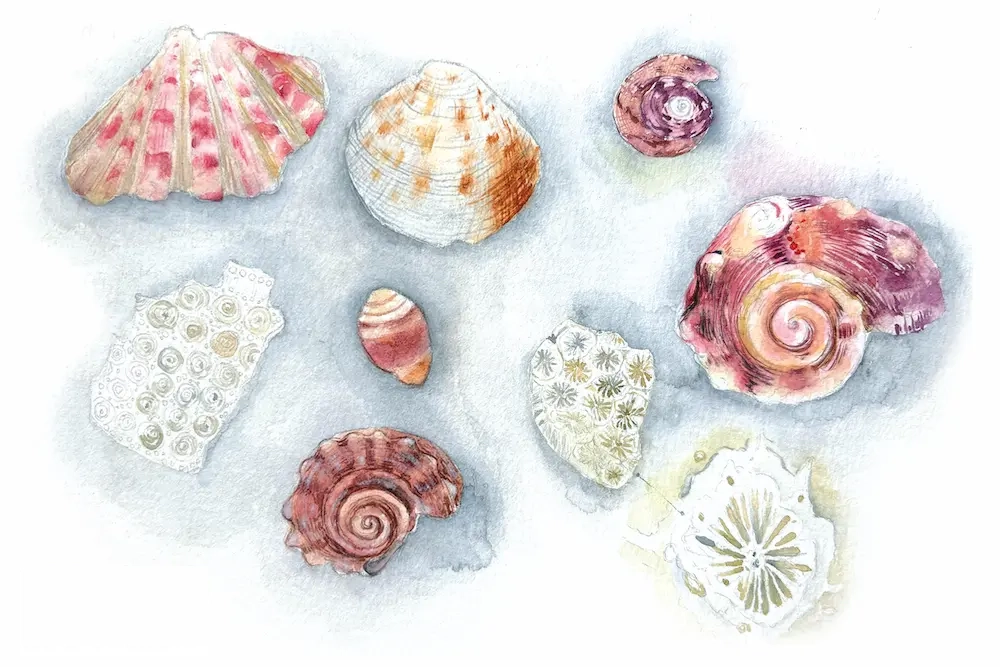
Burgos, Siargao
August 19, 2025 – 4:19 PM – High tide
Specimens shown (in no particular order):
- Scallop Shell (Argopecten sp.)
- Lucine clam (Lucina sp.)
- Turban snail (Turbo sp.)
- Cowrie (Cypraea sp.)
- Dolphin shell (Delphinula sp.)
- Part of a sea urchin skeleton (Echinometra sp.)
- Brain Coral Fragment (Favia sp.)
Burgos, Siargao
July 13, 2025 – 5:10 PM – Low tide
Philippine land snail (Camaenidae / Cyclophoridae) found along the plant-lined shore of burgos, these snails recycle leaf litter and fungi, enriching the soil and supporting biodiversity.
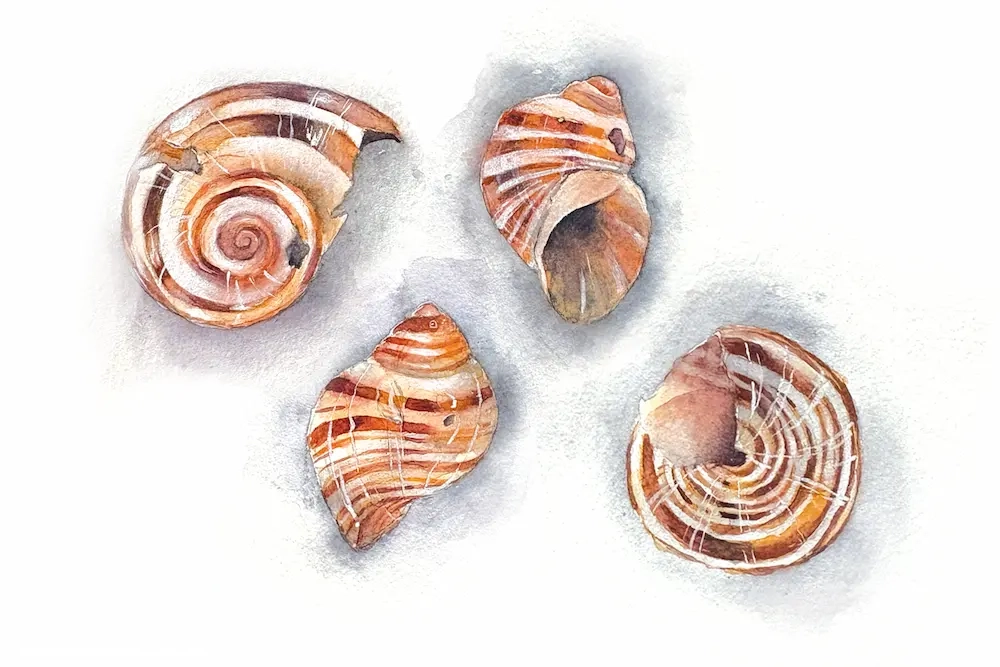
Anajawan Island, Siargao
Collected by a friend
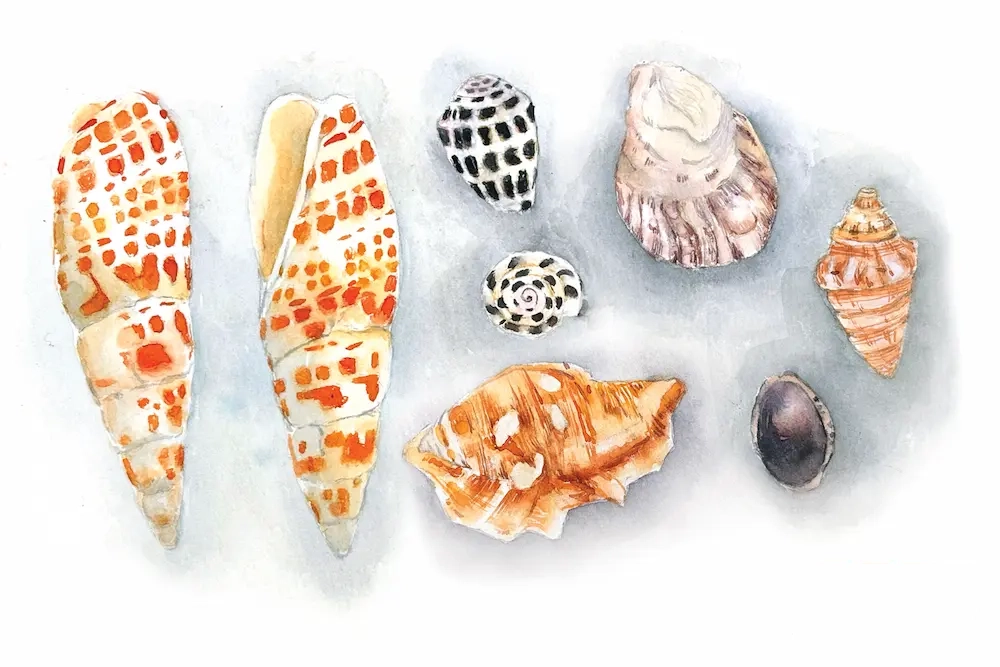
Specimens shown (in no particular order):
- Episcopal Miter (Mitra Mitra)
- Spotted Cone (Conus sp.)
- Murex Shell (Murex sp.)
- Slipper Snail (Credipula sp.)
- Little pitcher Conch (Canarium Urceus)
- Cowrie (Cypraea sp.)
Burgos, Siargao
February 26, 2026 – 4:25 PM – Low Tide
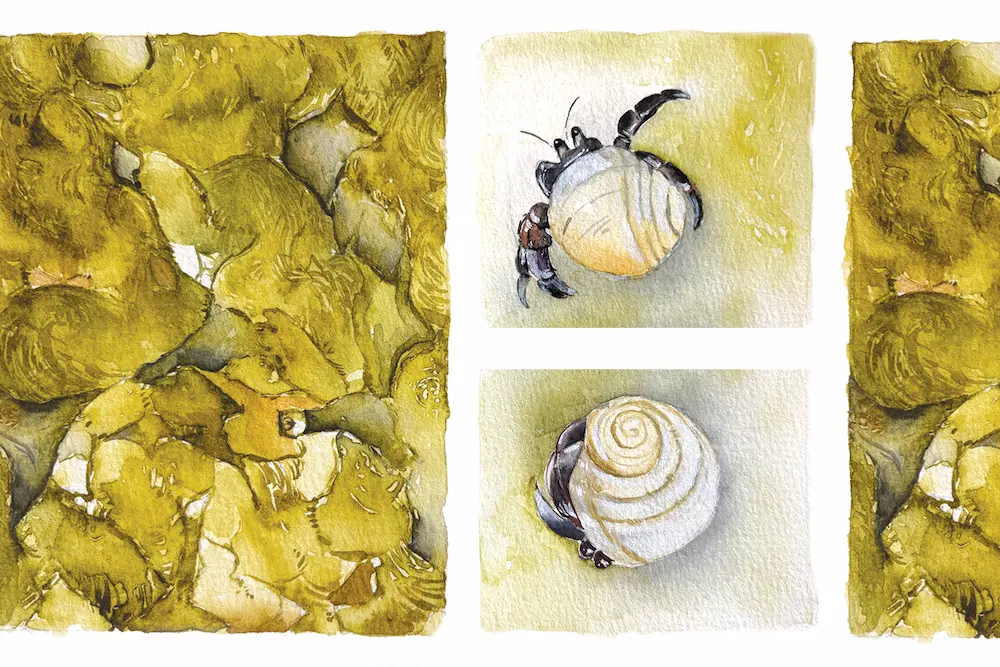
Umang (Hermit Crab / Paguroidea indet.) on Seagrass
Essential to coastal ecosystems, the Umang maintains seagrass health through nutrient cycling. Their lifecycle highlights marine interconnectedness as they rely on empty gastropod shells & form “vacancy chains” to trade & share shelter within the community.
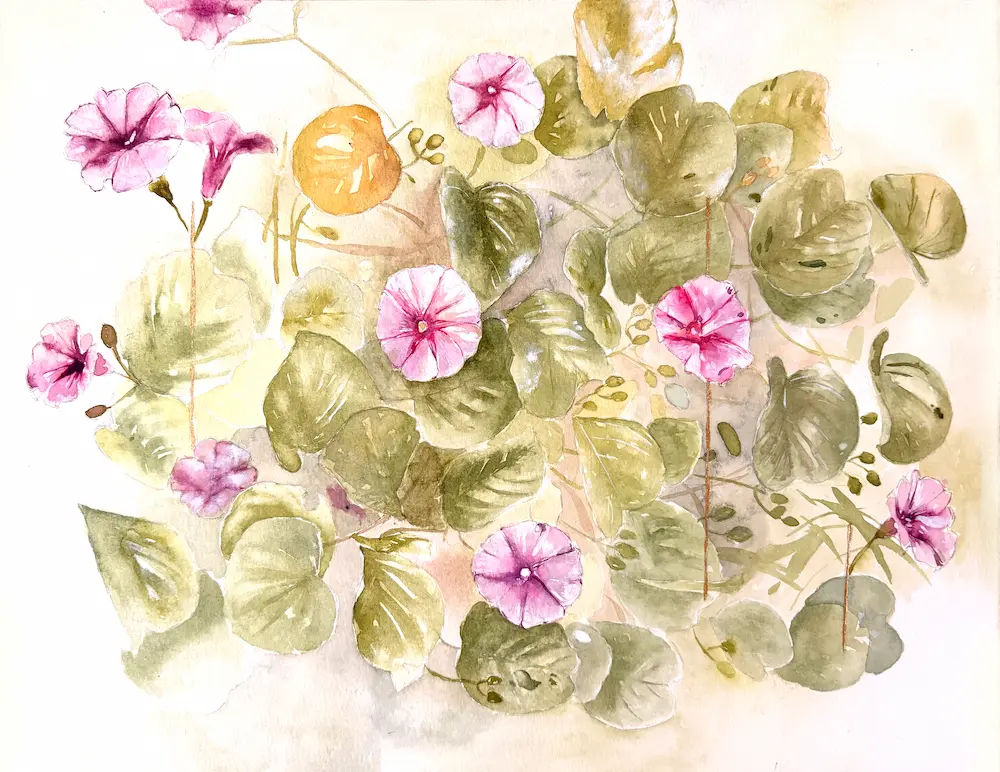
Palang-Palang (Beach Morning Glory / Ipomoea Pes-Caprae)
Commonly found along Philippine beaches, this plant is vital to prevent soil erosion and protect coastal ecosystems. It is also traditionally used in folk medicine to treat jellyfish stings and inflammation.
II: Reconnection: Memory, Culture, & Ecology
I’ve been on the island for over a year now. In that short amount of time, I’ve witnessed its ever-changing landscape. I’ve imagined infinite stories and relationships that have unfolded and will be unfolding here. Individuals who arrived and left, circled and intersected, which made me realize the many layers, stories, and relationships a place can hold.
A place isn’t an object to be utilized or consumed, for it holds memories of culture and ecology. A rapid rise in tourism and development may sometimes make us forget that. Hence, this part of the collection invites remembrance and reconnection to indigenous and pre-colonial relationships with the environment.
I grew up with the ancestral belief that every element of nature possesses a spirit. I was taught to say “tabi-tabi” whenever passing through wild spaces or when taking from a plant. These beliefs not only gave me a mystical lens on life but also taught me to have great respect for nature, and it’s a way of life that I hope to honor through this ongoing series.
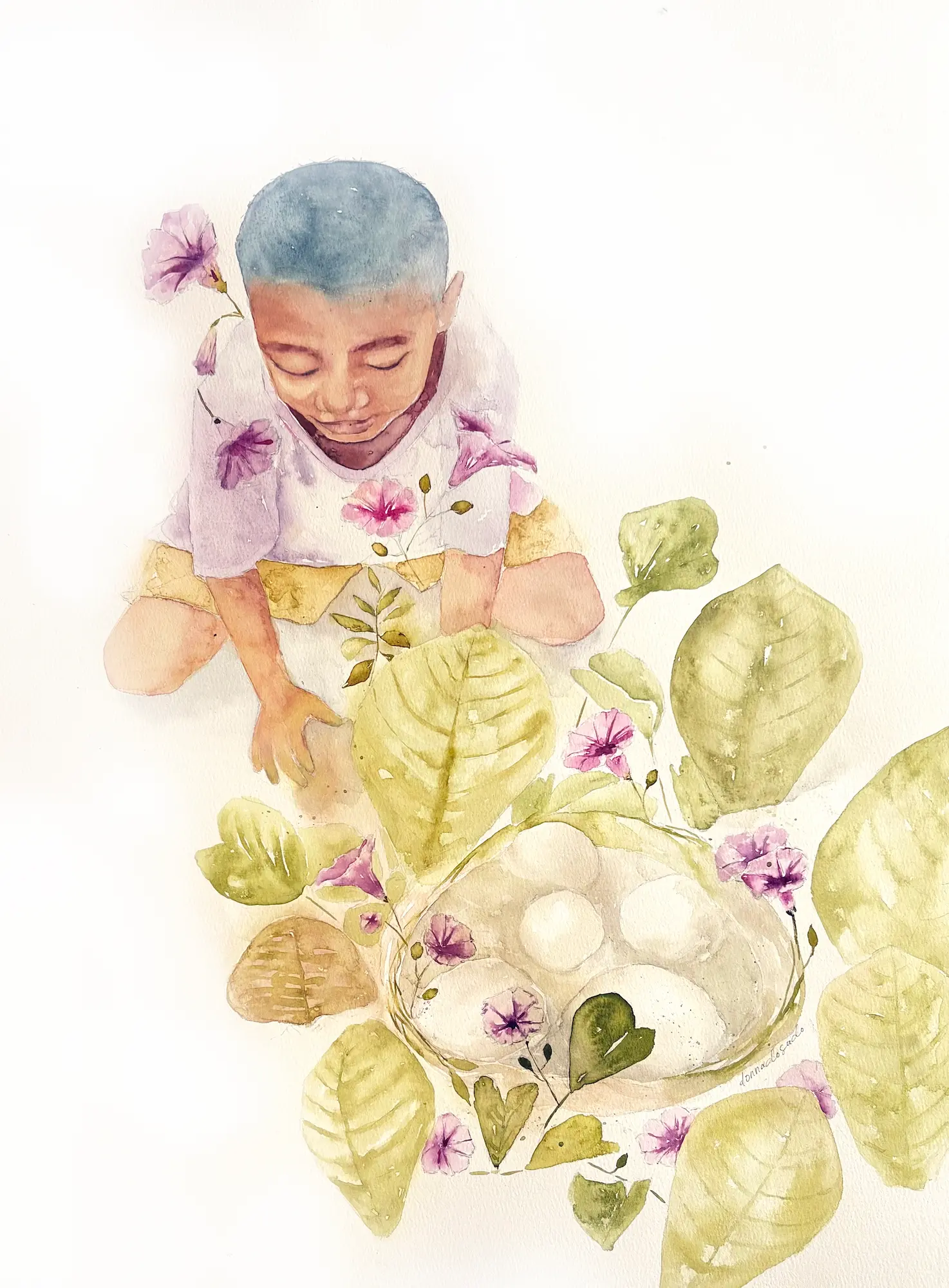
Atiman
Watercolor on paper
15 x 21 "
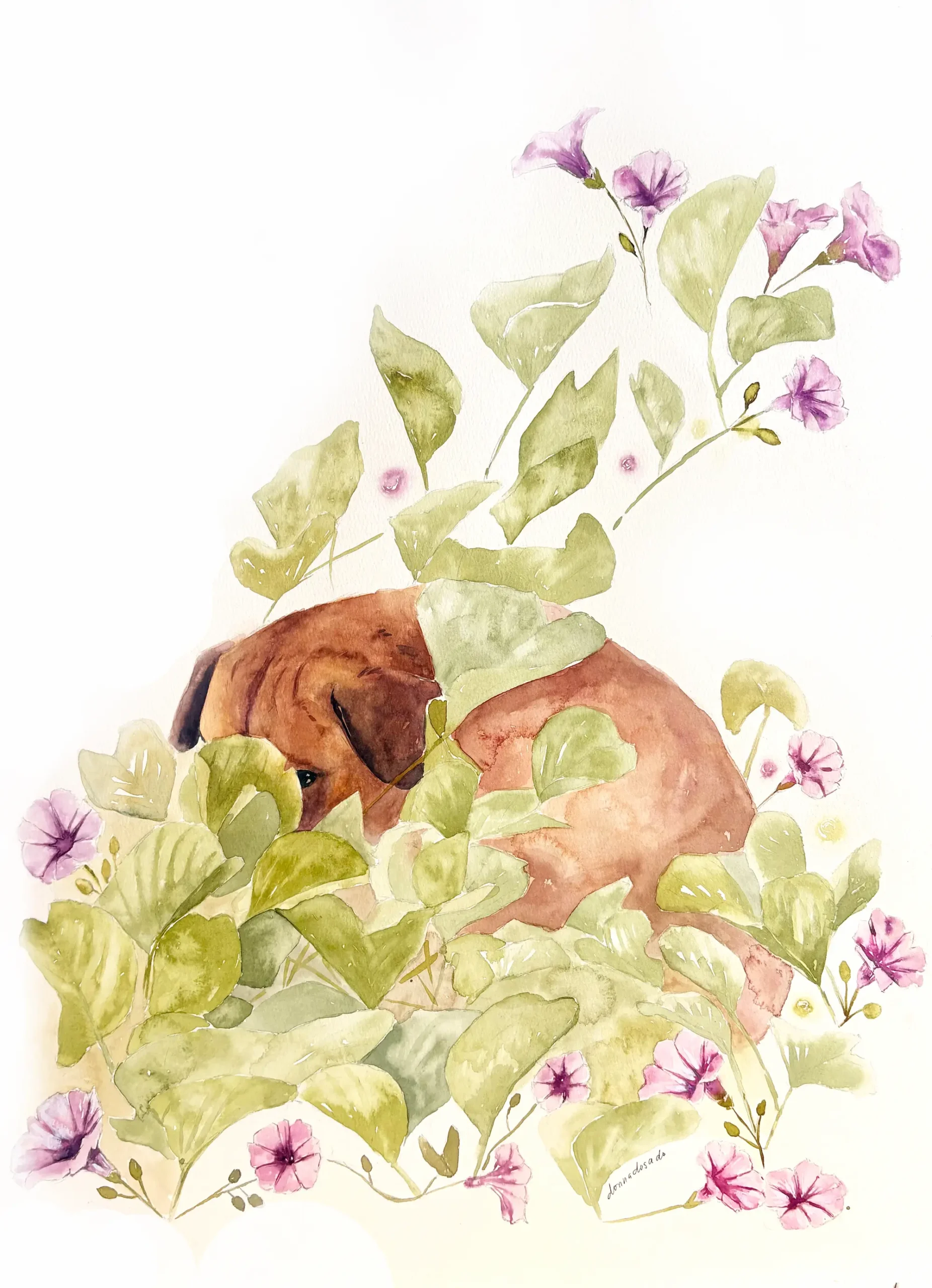
Pahulay
Watercolor on paper
15 x 21 "
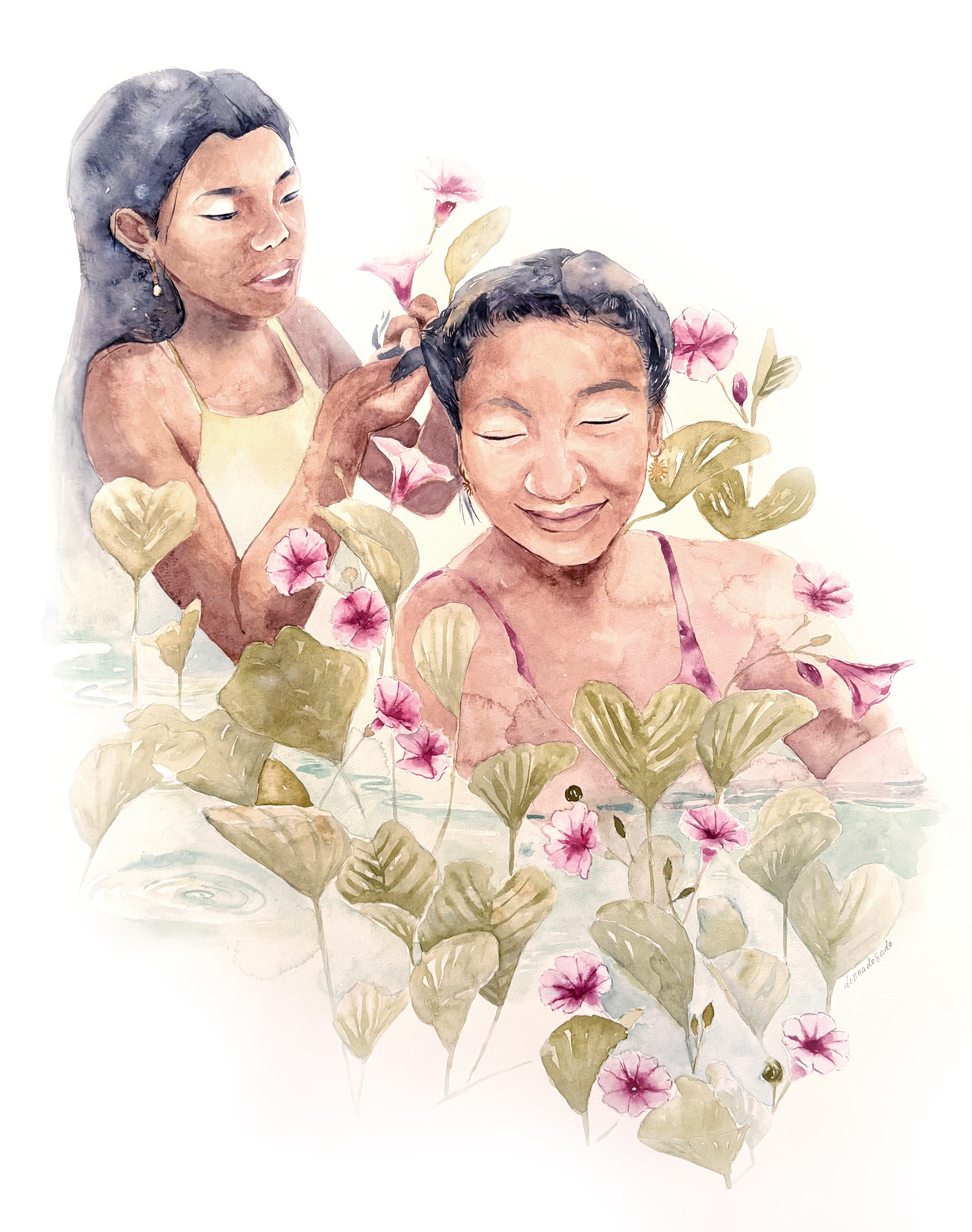
Sapid
Watercolor on paper
21 x 30 "
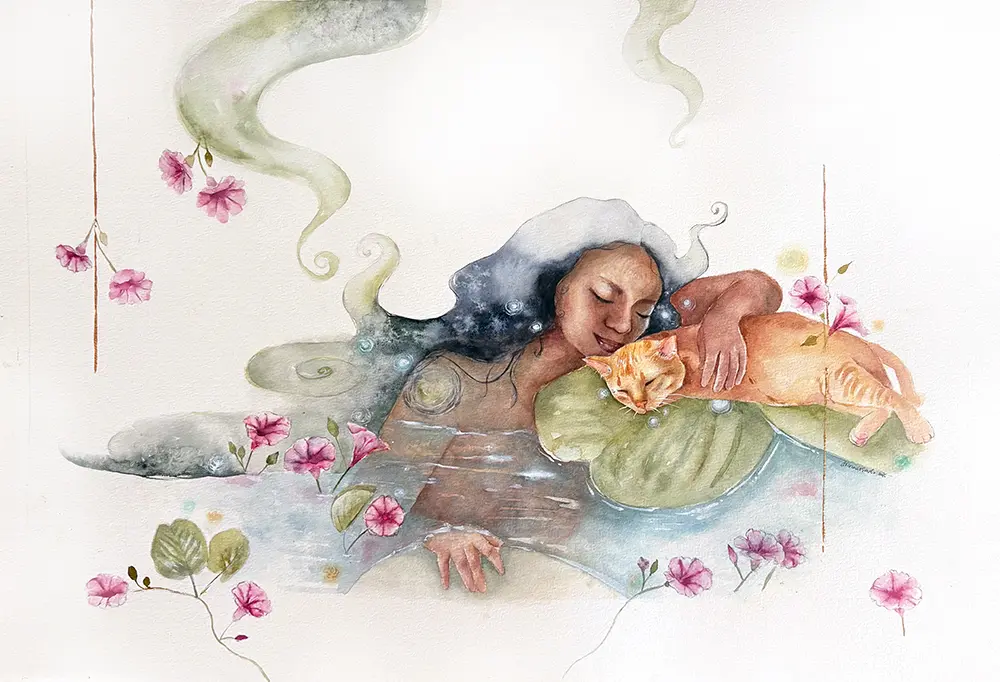
Abyan
Watercolor on paper
21 x 15 "
III: A space for conversation
I’ve always talked about Art being a ground to start important conversations. I’ve always believed in its power to create connections, deep emotions, and powerful movements. History agrees with me, and yet, I’ve mostly shied away from sharing my paintings and the intentions behind them, fearing it is doing too much, because I also thought great works of art do not need so many words. Yet two truths can exist, and so this part is a rewriting of that script. A shift in the pendulum because introspection isn’t the only path for growth.
This part of the collection is a space and invitation for a dialogue. If you’re interested in what I’m currently working on, if you are looking for an artist to translate your scientific field notes into art, if you happen to be working on something that aligns, or if you simply want to talk about the topics I’ve touched here, I would love to connect with you 🙂